Chemical Chains
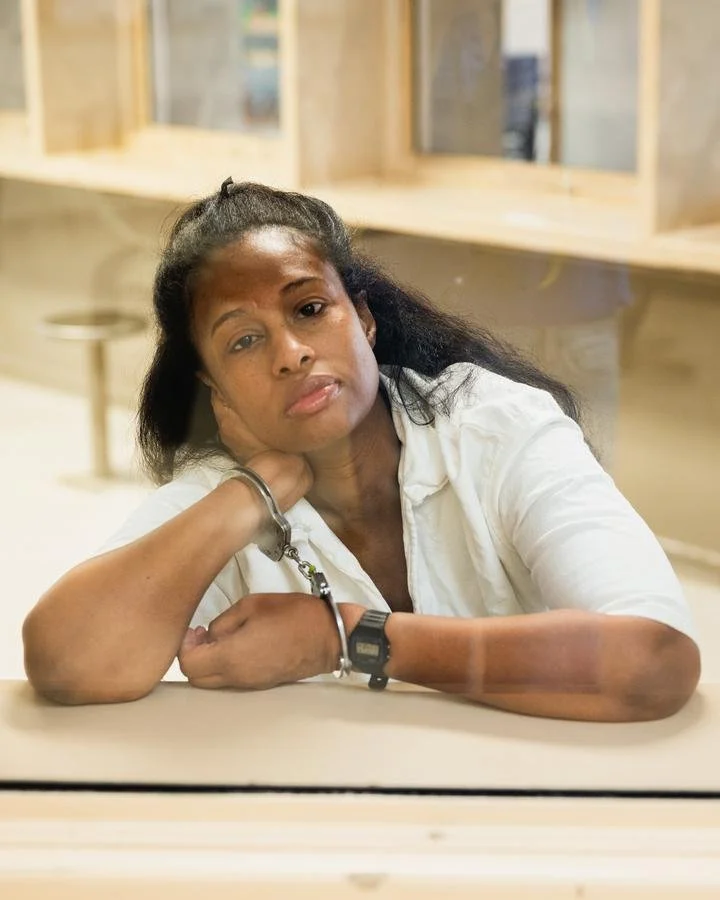
Dawn hadn't even broken when I watched my cellmate struggle with her makeshift solution. At 5:35am, with only fifteen minutes before we'd be marched out to work in the fields, she sat on the edge of her bunk, fashioning a rolled-up prison-issued pad into something that might work as a tampon. Her face twisted with frustration and humiliation.
Her only other pair of underwear hung on our cell's makeshift clothesline, still damp from yesterday's hasty wash. Blood had already stained her shorts, which she'd tried to rinse out in our tiny sink and now soaked in an empty cereal bag repurposed as a basin. The desperation in her eyes spoke volumes as she worked. "I swear this has to be the last month of this nightmare," she whispered. Not because she wanted to be pregnant, but because her medical appointment for Depo was finally scheduled after months of requests. Like so many of us, she was tired of the monthly ritual of begging officers for basic supplies, or trading commissary items at inflated prices with older women who no longer needed their ration.
I watched as she inserted her improvised solution, then grabbed her damp underwear with one hand while aiming her travel hair dryer towards them with the other, the sound barely masking her quiet sobs of frustration. I felt guilty for my relief at not sharing her struggle anymore. The Depo shots had stopped my cycles months ago. But something about witnessing this scene – this profound indignity forced upon capable, adult women solidified like concrete in my gut. We weren't asking for luxury; we were begging for the bare minimum to maintain our humanity. The twisted part was how we'd all been conditioned to accept this as normal, even as everything inside me screamed that was anything but.
Nobody asks why so many women in Texas prisons are on birth control. In a place where sexual contact is illegal, where conjugal visits don't exist. Why are we lining up for Depo Provera, contraceptive shots? The answer reveals a darker truth about survival behind these walls.
It's not usually about preventing pregnancy. It's about stopping our periods, a common side-effect of Depo Provera. We need cessation of our menstruation because the state won't provide adequate menstrual supplies.
When you're forced to labor. Unpaid in the fields, in the kitchen, and maintaining the prison. There are no wages to purchase pads and tampons from the prison commissary. When guards weaponize our basic biological function by using hygiene supplies as currency for sexual favors, women face impossible choices. Stop your period or risk your dignity, your safety, and sanity.
I still remember the jarring disconnect between institutional messaging and reality. On our prison tablets, we could watch a video of the former warden insisting that feminine hygiene products are readily available – "all you have to do is ask." What she conveniently neglects to mention is that guards can't give us what they don't have. They often claim supplies are unavailable, leaving us desperate and vulnerable.
Let me be clear: We're using powerful hormones to shut down our reproductive systems because the alternative is creating a DIY tampon by folding pads, possibly leading to Toxic Shock Syndrome. I've seen these makeshift solutions firsthand - torn bedsheets, wadded toilet paper, even socks folded into uncomfortable shapes - all desperate attempts to manage what should be a basic biological function with dignity. We can choose to bleed through our clothes, use toilet paper as pads until that runs out, and then socks are used as toilet paper. Certain guards insist on exchanging soiled pads for clean pads. We should be provided an entire pack of tampons and pads monthly. Instead, we're stuck submitting to predatory staff who dangle much needed supplies like bait. We're stuck trying to convince guards, who are usually young males, that the two tampons they gave us yesterday wasn't enough.
This control over women's bodies in prison provides a chilling blueprint for broader state control. As the Trump 2025 administration seeks to exert more control over women's bodies by rolling back reproductive rights, the current political moment reflects a disturbing pattern of diminishing women's healthcare rights in America. What's happening in womens prisons isn't isolated–it's the canary in the goldmine.
Does anyone ask about the long-term effects on our bodies? Medical research shows extended use of hormonal birth control for menstrual suppression can lead to bone density loss, increased risk of blood clots, mood disorders and depression, and potential fertility issues. But who's tracking these effects in prison?
At night, I'd lie awake listening to ads blasting on my clear plastic AM/FM radio for Depo Provera class-action lawsuits for those experiencing the side effect of intracranial bleeding. The irony wasn't lost on me–being administered the same drug that lawyers were fighting against on the outside.
Nobody is monitoring our mental health, when hormonal shifts combine with the trauma of incarceration, increased risks after years of Depo Provera. The intended medical uses for birth control include preventing pregnancy, regulating menstrual cycles, treating endometriosis, managing PCOS, and reducing severe cramps and controlling heavy bleeding. But nobody thinks using it off-label is cheaper than purchasing the hygiene supplies.
We shouldn't have to choose between natural bodily functions and pilfering towels to get through the month like we're living in medieval times.
When incarcerated women report side effects like mood changes, they're often dismissed or told to "drink more water, wait it out, and lose weight." The same system that makes birth control readily available makes it nearly impossible to stop it when problems arise.
The reality is this is another form of institutional control over women's bodies. They create conditions where we're forced to choose between our long-term health and our immediate dignity. They know exactly what they're doing when they restrict access to menstrual supplies while making birth control easily available.
Its not just guards in Texas who withhold pads and tampons in exchange for sexual favors. Reports from Alabama women's prisons document the same abuses–guards leveraging basic hygiene products for sexual exploitation. This policing of confined women's bodies connects to recent anti-women's legislation where free women's autonomy is systematically undermined, from healthcare access to reproductive rights.
Where's the outrage? Where are the investigations? Where are the policy makers who claim to care about women's health? This isn't just about hygiene supplies or contraceptives; it's about systemic dehumanization of incarcerated women.
We need immediate action like adequate free menstrual supplies, mental health support, proper medical monitoring and policy change. Until then, women in Texas prisons will continue sacrificing their health for basic dignity. This is what state control over women's bodies looks like in its most raw form and nobody's talking about it.