
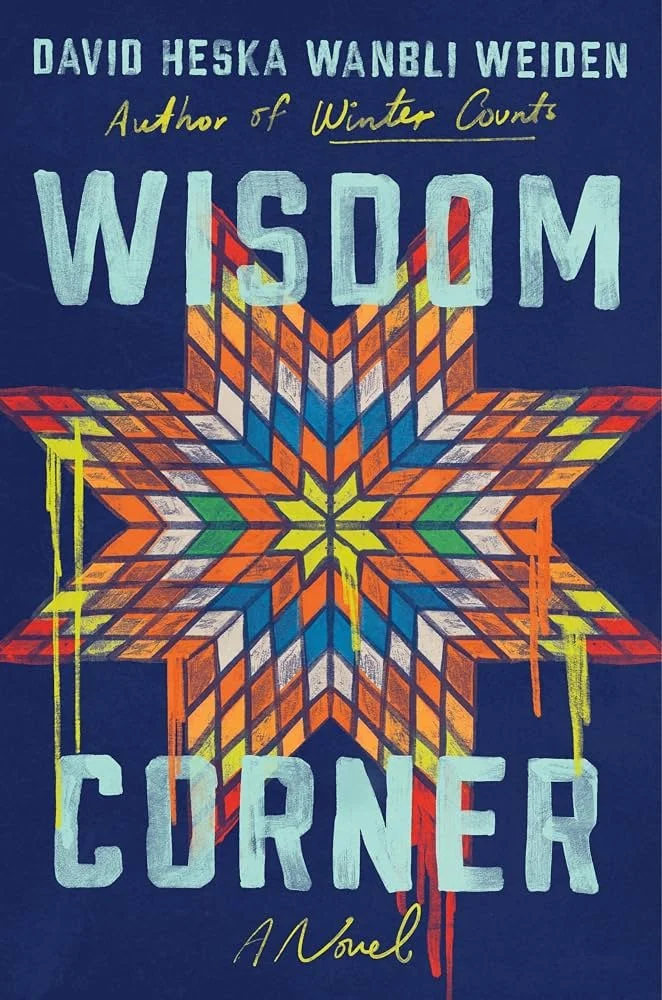
Wisdom Corner: An Interview with David Heska Wanbli Weiden
“As the writing progresses, I also think about image patterns and thematic elements. By the end of the process, all of these components have hopefully combined to create a novel that’s not only entertaining, but one that also illuminates in a uniquely Indigenous way.”
A New Generation of Colombian Writers: Authors Interviews from the Colombian Writer’s Symposium, Part 3
This interview is the final installment of a three-part interview series. Please head to Part One and Part Two to read more.
A New Generation of Colombian Writers: Authors Interviews from the Colombian Writer’s Symposium, Part 1
My Colombian aunties often insisted that I came from literary stock. As a child, I was dubious. My mother had not finished high school. She had been raised in a small village, in a family of twelve children. In New Jersey, I was the translator for her and her three sisters. None of us had stepped foot in a bookstore. But the aunties insisted we all had a great literary heritage, and for evidence, they pointed to Gabriel García Márquez, who was awarded the Nobel Prize in Literature in 1982, and whose novel One Hundred Years of Solitude became the basis for a Netflix series in 2024.
A Review of Disaster Tourism by Rena J. Mosteirin
The speaker does not posit any panaceas for the ills in our lives, but it does present a mirror in which we can all look into to question our relationship to safety, home, politics, and the environment – all of which are deeply interconnected.
An Interview with Adedayo Agarau
Adedayo Agarau’s debut poetry collection The Years of Blood invokes dreamscapes with oneiric lyricism to meditate on communal loss and grieving. Confronting histories, social and personal, he contends with the costs of inheritance, including the afterlives of ritual violence, in a series of elegiac poems whose ululations echo beyond the borders of the page. – Won Lee
A History We Thought We Knew: An Interview with Tamar Shapiro
In a recent interview, I talked with Tamar Shapiro about her character-driven writing style, about how families can resemble countries, and about what we, as citizens of a politically divided America, stand to learn by taking a deeper, more intimate look at a history we thought we knew.
“Death does not kill relation”: A Review of Aracelis Girmay’s Green of All Heads
The porous nature of Girmay’s world, sprawling between and through life and death, does not portray an easy communication with the deceased. Instead, we strain, we grasp at what may only be shadows in the aftermath of immeasurable loss.
Issue #168 Mixtape
Welcome to the soundtrack for Issue #168! These songs have been hand-selected by our contributors to serve as the soundscape for our new issue. The playlist is available to listen on Spotify here.
“The Story Has Its Own Logic”: An Interview with Mac Crane
“But honestly, most really great players that I’ve studied have that hungry, obsessive temperament. In the world of the book, it doesn’t occur to Mack that you can play ‘for fun.’ Why would you step on the court, play a game and then let it go?”
In Defense of Subjective Silences: Audience, archive and access in three debut poetry collections
As poets, we navigate silence, but we also have the choice to proliferate some silences and not others. We may lock a door to one audience and open it for another. There are doors we, ourselves, may not open.
An Interview with Kimiko Hahn
“First, one must apprentice themselves not to my work but to the Japanese classics.”