He opened two credit cards in my name, as well as a checking account. None of that was surprising, given what I’d heard from others whose passwords had been hacked, nor was it too difficult to remedy. The banks canceled the cards, shut down the account, and blocked any accumulated debt from being applied to my credit rating.
But he’d also taken out a pair of mortgages: one on a piece of property outside Las Vegas, which he promptly sold for a profit; the other on a houseboat on Lake Shasta, for which I now received monthly statements. I couldn’t afford a houseboat, though in the process of unloading it I did drive down to visit and found it to be in a particularly lovely spot, with a view of the glacier-capped mountain across still water, the lake itself clear and cool after the late autumn rains had doused all the nearby wildfires. I knew Lake Shasta was a big party spot, especially for college kids during Spring Break, and I certainly wouldn’t have wanted to be around when the place was raucous with drunken revelers. But for now I enjoyed an evening on the deck of the place I hadn’t bought and yet which was somehow in my name. It was pleasantly indulgent to imagine moving my family here, leaving behind the life we’d been living until now, waking every morning instead to the sight of mist hovering over ripples made by paddling grebes and fish surfacing to feed.
That was the only financial hole he’d dug for me to climb out of. But of course he also managed to get himself identification in my name. A pair of driver’s licenses—one in Montana, another in Maryland—and a passport he used to fly first to Seoul and then to Brussels. The authorities managed to track his movements only after he’d departed whatever country he visited, and I heard about his activities after a delay of a month or more. There was an arrest in Rotterdam on charges unrelated to anything he’d done to me, then a flight from bond, an alert sent to Interpol. The local police in my small city got word of it and paid me a visit, and it took several hours to make them understand that I wasn’t the one they were looking for, that I hadn’t left the country in the past six months—in the past six years, in fact—and that the person using my name was a complete stranger to me.
And yet, at times, not entirely strange. In late spring he checked into a hotel in Edinburgh, the very hotel where I’d tended bar some twenty years earlier, on a work exchange program after my college graduation. It was just around the corner from the Royal Mile, a haunted old place where I served drinks to the Scottish National Rugby team at banquets celebrating each of their home losses. Then he traveled north, stopping a night in Glencoe, in the same bunkhouse I’d slept in the night before hiking the razor peaks of Aonach Eagach in pelting rain. The whitewashed stone building was one of the few structures still standing from before the infamous Glencoe massacre, when the devious Campbells turned on their gracious Macdonald hosts, murdering families and burning down homes because the clan refused to pledge loyalty to the newly installed monarchs. I remembered the uneasy night I’d spent there, hardly able to sleep even after the many whiskies I’d consumed at the pub a mile down a black road. That had been a hard summer already, a break-up leaving me disconsolate to the point of near-despair, and when I reached the top of the peaks the next morning, glancing down over sheer cliffs on either side, I contemplated the freedom I might find if I let my foot slip and gravity had its way with me.
But from there he went on to Skye, where I’d later recovered from heartbreak and found new purpose while sitting on a wooden dock at Sligachan, watching a sunset unlike any I’d experienced before, a flash of green spreading on the water before the whole world went orange and pink. I’d been meaning to go back to Skye for years, to take my family there, but work had gotten in the way, and money, and here it was two decades since I’d seen the sunset that had, I believed at the time, saved my life. It had nearly slipped my mind before the word Sligachan arrived in an email alerting me that I’d left an item behind in the guesthouse there. If I would be so kind as to send my address, the desk clerk wrote, as well as to pay for the shipping, it would arrive by post in a fortnight.
After that, the person using my name went to places I’d never been but had longed to go, if only I’d had more time and more funds, if I hadn’t needed to get home to pick up the cat I’d left at a friend’s house and which he mostly neglected for the year I was away. Orkney, the Shetlands, then on through Scandinavia and across the Baltic Sea to St. Petersburg, where my maternal grandfather had lived for a time as a teenager, a proud member of the Communist Party during the early ecstatic flourishing of the Bolshevik experiment, before his father, already settled in Connecticut, sent money for him to emigrate. Then south through Odessa, birthplace of my hero Isaac Babel, across the Black Sea to Turkey, then Egypt, where he followed the Nile upriver to its source.
He made his way to sights in Africa I’d once dreamed of seeing during my adventurous traveling days but had never come close to visiting: Kilimanjaro, Victoria Falls, the plains of Serengeti, all those well-known and obvious tourist destinations; but also the gorilla reserve in Uganda and several cities in Nigeria before arriving in Sierra Leone, a place I’d never imagined setting foot. While there he volunteered with an NGO providing aid to war orphans, and he must have done selfless or courageous enough work to receive a prestigious award from an international human rights organization, about which I was informed once more by email, with a note of gratitude and congratulations. The check, however, didn’t come to me, only another note thanking me for donating the funds back to the NGO. After that, he disappeared for some time.
By then the package from Sligachan had arrived, a slim box about a foot long and two inches high. It made no sound when I shook it, and I was unreasonably nervous to open it, as if I might have sent myself some piece of contraband that would once again bring the police to my door; or perhaps an explosive to get rid of the person who rightly carried my name.
But inside was nothing more than a black leather belt, much higher quality than any belt I’d ever used, the leather supple but sturdy, the buckle simple and elegant, made of real silver, I guessed, from the way it had begun to tarnish. The truth is I needed a new belt, badly. The one I was wearing I’d been given by an old girlfriend, maybe a dozen years earlier, the leather cracked in several places now, one of the three prongs on the buckle broken. I slipped the new belt into the loops of my jeans and instantly felt a sense of security and relief, as if all this time I’d worried my pants would fall down at any moment and the rest of me would follow.
My wife noticed it, too—not the belt but the way I carried myself, as if I’d regained a measure of the youth that had been worn out of me by the grind of work and parenting and domestic chores. The month that followed was one of the happiest of our marriage: we hired babysitters and went to restaurants we’d never tried before; we took the kid on spontaneous drives to the coast to watch migrating gray whales and forage for chanterelles; we made love more than the routine once or twice a month and in more than the routine one or two positions that had become our habit in recent years.
The next time I got word of the other person with my name, he’d filed a marriage license in Auckland, a copy of which came to me by text message from an unfamiliar number, along with dozens of photos from the wedding, though none showing the bride and groom. Just guests mingling in front of a buffet table spread with fruit and salads, a ravaged cake, a DJ frozen between two turntables. The guests all looked about my age but more fit and more tan, people of wealth and class, it seemed, wearing expensive but casual clothes, the men showing off tufts of hair through open shirt collars, the women plenty of cleavage and buttocks free of underwear lines beneath flimsy dresses snug over thongs.
I thought I recognized one of the guests, a guy I’d worked with at the bar in Edinburgh. He was one of my best friends from that time, someone with whom I’d spent dozens of drunken nights wreaking havoc around the city but with whom I’d lost contact soon after I’d returned to the States. He was originally from Wellington, but I knew he’d planned to move to Auckland when he eventually made it home. I’d wanted to invite him to my wedding but didn’t think he’d travel all that way just for me. And now here he was at my wedding after all, smiling that big squinty smile that meant he’d already had too much to drink and would soon start picking fights with strangers.
I forwarded the marriage license to the authorities and figured this time the person who’d stolen my name would finally come to justice. He couldn’t get away with his crimes forever. Before long the false passport would be confiscated, and I’d no longer have to hear about his escapades.
I knew I should have felt relieved, but instead I paced the house and picked at loose threads on a sweater, overwhelmed with the sense that I’d set something in motion I now wished I could stop. I didn’t know what would happen when this other version of me—the better version, I feared—was erased from the public record. Would it give me the freedom to focus instead on bettering myself? Or to stop trying so hard to live up to something I could never match?
My wife and kid were out, both lifting weights at the gym I refused to join, with the excuse that I got plenty of exercise working in the yard. But I didn’t feel like working in the yard now, even though the grass had grown shaggy, the shrubs a little wild. I didn’t want to read a book, either, or even watch TV. Instead I took a magazine into the bathroom, hoping to get some relief from the constipation that had plagued me since I’d turned forty, half a dozen years ago.
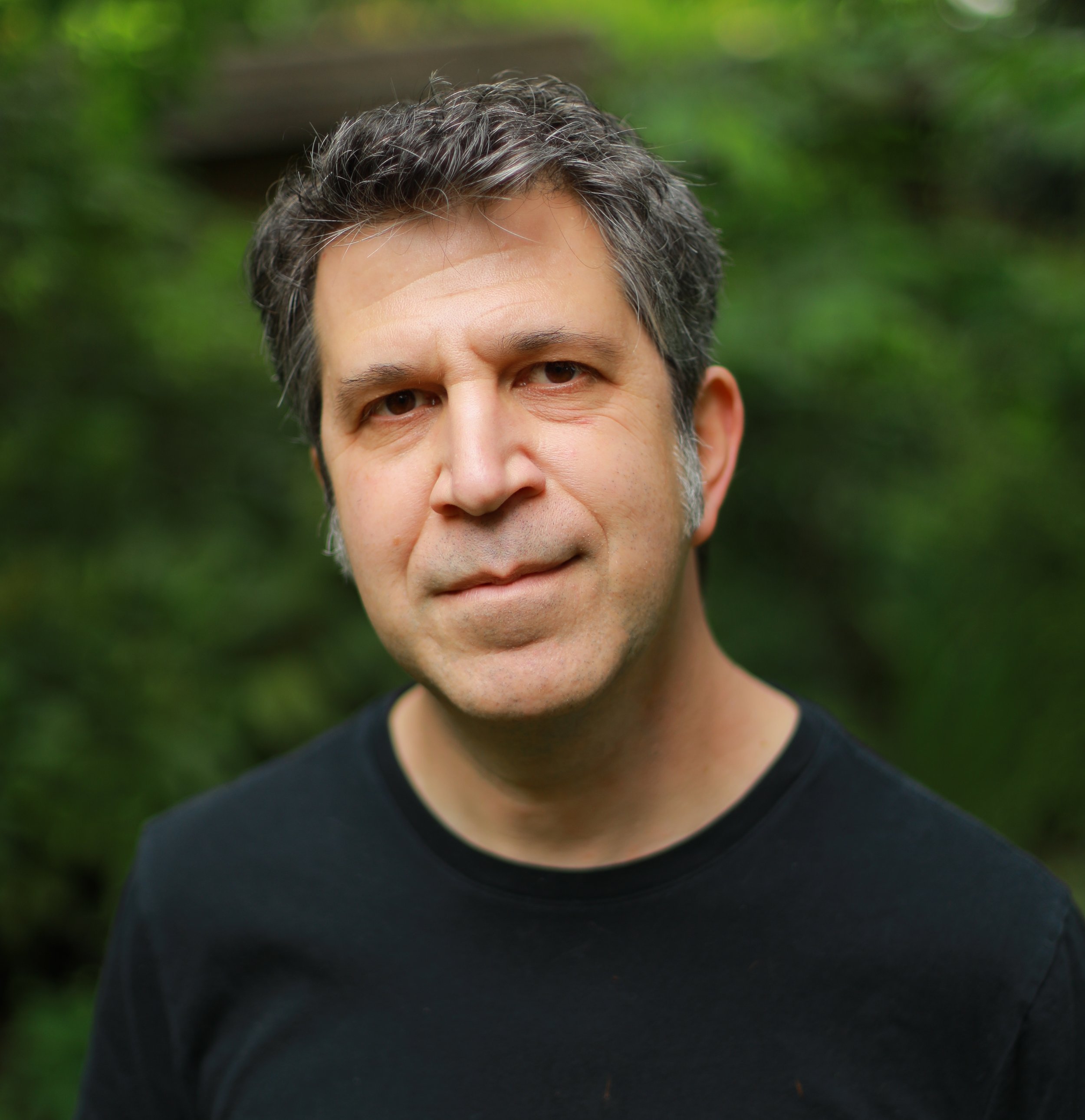
On the way I paused in front of the mirror and took a moment to judge the face I saw in front of me, the skin at the jaw beginning to loosen, most of the hair above the ears going gray. My wife had told me the little bald spot on my crown had widened in the last year, but I couldn’t feel any difference when I reached up to touch it. I wasn’t a terrible looking person, but I couldn’t imagine myself standing with those elegant beauties in Auckland, couldn’t imagine any of them coming to my wedding, not even the one I’d once been so close with in my early twenties, who was now—I knew from social media—some kind of tech executive and no longer the skinny hotel barman with whom I’d stumbled over cobblestone streets, shouting profanities at dense, spitting clouds.
You’ve done just fine, I told myself, unhooking the tarnished silver belt buckle I hadn’t yet bothered to polish, and offered the half-cocked, self-deprecating smile I’d used to disarm people most of my life. But this time it didn’t have its intended effect, didn’t set me at ease. Instead it only troubled me more when the person in the mirror took an extra beat to smile back.