
-
EDITOR’S NOTE
Dear reader,
I write this to you from the porch of a log cabin in Michigan’s Upper Peninsula where, with my morning coffee in hand, I am captivated by a community of ducks diving for their breakfast in the nearby pond. As if guided by some invisible ritual of time, the ducks move through a rhythmic motion of tucking their bills into the water, sending their feathery butts up to the heavens with a powerful kick of their webbed feet, and returning upright with a bite to eat. The water’s inner contents are shielded by thick clumps of algae, and I wonder if the ducks can see through the water’s opacity, if they know what lives beyond the veneer of mirror and silt. Or rather, do the ducks dive headfirst into the water despite the harms that might lurk beyond? I’m impressed by their ability to live in accordance with their instinct. It is their nature to dive, to search through the abyss, to find sustenance, to find home in the water.
I look beyond the ducks to see a squirrel pluck a red-capped russula mushroom, her own version of breakfast, and carry it under a cedar canopy, helping the mushroom spread its spores across the forest floor. I see star thistle, mountain mint, mullein in its third year, death bloom rising.
These small forest epiphanies just beyond my porch are a reminder that nature’s ecosystems and its countless denizens are a sublime example of the cooperation it takes to build the world.
And yet, the air is thick with haze. Wildfires. It’s no secret that we are living through the pages of some far-off history textbook. Each day brings a new horror, whether it’s floods or famine or fascism. As writers, it’s our job to turn, as Vivian Gornick would say, “the situation” into “the story.” We show up for our communities by bearing witness, by gathering stories for future generations, and by not letting atrocities slip past public accountability. But when do we transition from experiencing to synthesizing? Where is the barrier between “living amidst” and “having lived through?” Having survived?
It's easy to get lost in the wilderness of our minds. In her story “Vaster Than Empires and More Slow” Ursula K LeGuin wrote “We all have forests in our minds. Forests unexplored, unending. Each of us gets lost in the forest, every night, alone.” But when we are ready, we find that narrow path out of the woods, that kernel of inspiration, and we begin the work.
We have a role to play in supporting our own ecosystems, but that role is dynamic and ever-changing and, most importantly, alive. Nature shows us how necessary it is to change, to adapt. No structure, especially human-made, is immovable. My god, earthquakes have reversed the directions of rivers.
This act of creation, of making space for our vision of the world, is our most potent form of power. Issue #168 of TriQuarterly is our own proverbial forest filled with visions of fantastic worlds, characters, and stories that will lead you to the familiar and the strange alike. Follow the quilt of voices like a scatter of constellations, a map among the stars, where the night is “a hundred thousand tender, expectant eyes.” — Christopher Murphy, 168
“In the dark, every sound is an object without a boundary.” — Tyler Raso, 168
“Not so very long ago, I was ripe / and moon-heavy. Everything was future.” — Alice Ashe, 168
“The combs have been sucked of the last bits of summer.” — Stacy Gnall, 168
“I watched and was never told to look away.” — Christina Santi, 168
“fluorescents bearing down / like a strange heaven.” — Ezra Fox, 168
“All the dark birds / I named for myself take flight.” — Emily Adams-Aucoin, 168
My deepest gratitude goes to all those that make TriQuarterly the thriving ecosystem it is– my fellow editors Hannah Bonner, Starr Davis, Dan Fliegel, Jennifer Companik, Patrick Bernhard, Emily Mirengoff, and Laura Joyce-Hubbard, as well as our visionary readers and contributors, advisors Colin Pope and Natasha Trethewey, and Northwestern’s English department. TriQuarterly has undergone eras of change since its inception, and issue #168 is a testament to the magazine’s resilience, adaptability, and dedication to featuring works that test the boundaries of modern literature.
Annie Dillard once wrote in response to the classic philosophical conundrum about the tree falling in the forest– “The answer must be, I think that beauty and grace are performed whether or not we will or sense them. The least we can do is try to be there.”
Maybe we will find each other in this wild forest. Maybe we can help each other through.
Sincerely,
– Jess Masi, Managing Editor
MASTHEAD
Managing Editor: Jess Masi
Faculty Advisor: Natasha Trethewey
Staff Advisor: Colin Pope
Film Editor: Hannah Bonner
Fiction Editors: Jennifer Companik, Emily Mirengoff, Patrick Bernhard, Laura Joyce-Hubbard
Nonfiction Editor: Starr Davis
Poetry Editor: Daniel Fliegel
Readers: Nathalie Bonds, Erika Carey, Eleanor Colligan, Liz Howey, Nathaniel Forester, Jess Limardo, Claire Moacdieh, Sarbani Mukherjee, Amanda Norton, Paula Nwosu, Andrew Stojkovich, genea tafesse, Amanda Vitale, Jeremy Wilson, Eileen Zampa, Jodi Cressman, Amanda Dee, Kristi Ferguson, Susan Lerner, Jenna Mather, Andi Myles, Sarah Minor, Kathryn O'Day, Lauren Short, Yvonne W, Kelsey Werkheiser, D.S. Winters, Christine Barkley, William Ward Butler, Daylyn Carrigan, Abigail Chang, Cindy King, Jessica Manack, Amanda Maret Scharf, Tanya Young
Summer 2025 Interns: Sarkis Antonyan, Helen Gu, Ethan Kwak, Ocean Teu
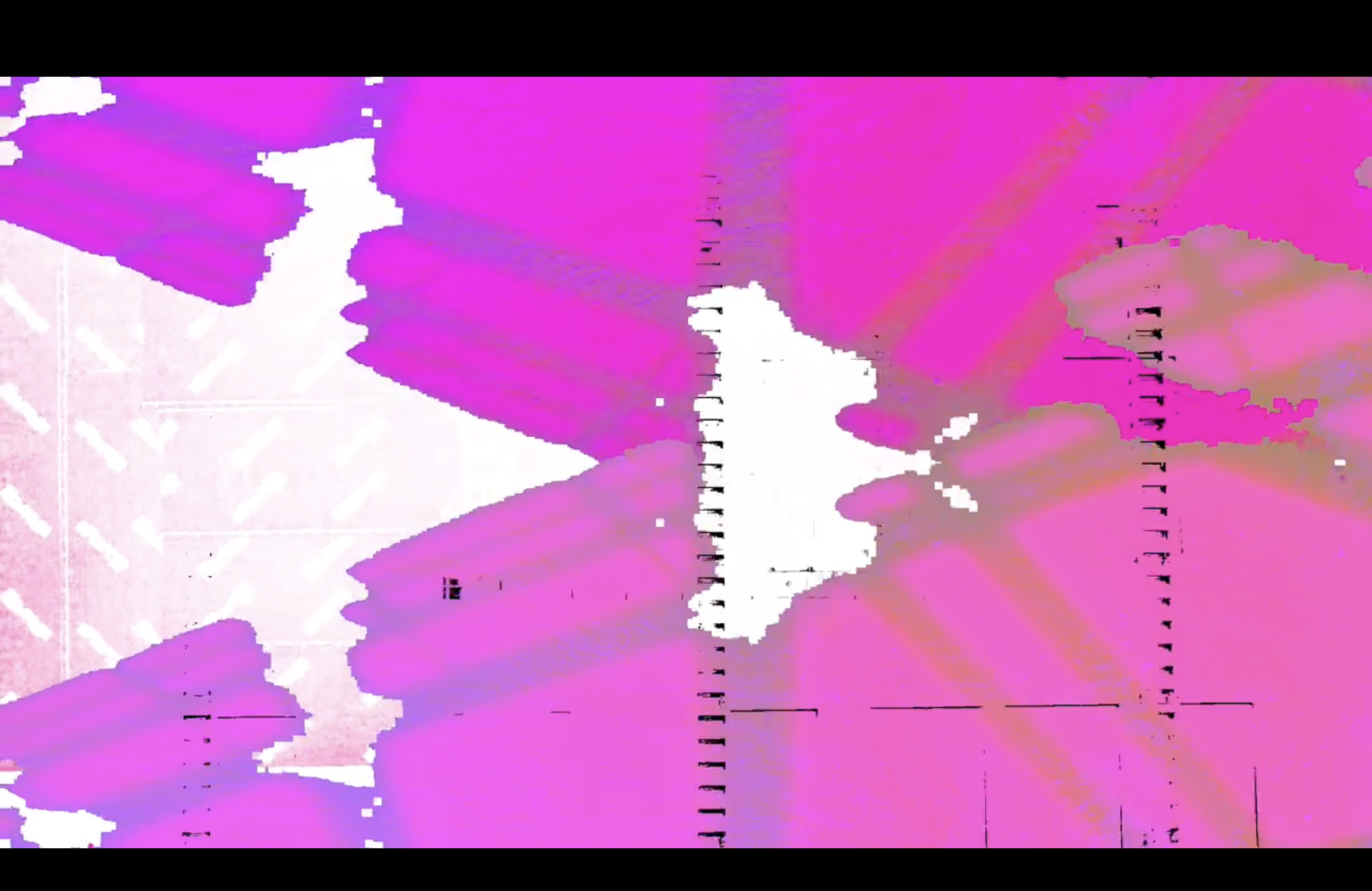
Image from letters to [and from] Pablo by Rana San
Everywhere is home and nowhere is a place I hope to visit
I saw our lives together in a snatch of clairvoyance. Her head in my lap, our legs intertwined, something unpatriotic playing on the speakers. I knew it before she showed me, the shape of her body underneath her sweater, the litter of moles across her back, the streak of meanness she had in her—little things you could only know about a person when you’ve spent a great deal of time with them in close proximity.
I had the urge to skip to the end, to find out if we made it, but the moment had passed.
Night Kids
The night is not a person, but it has a hundred thousand tender, expectant eyes. It has long fingers in the shadows. More than anything, it has ears.
excerpt from Search Engine
There was, at first, a squeaking. It came from above, made the walls grit their teeth, like looking into a bone-soft light. Then, a voice that sounded erased, then another. I didn’t know what one said to the other, whether it was important, but the shape of it was flat and furred, like a rug or a breath, and the response was like a mirror, a thing without itself.
![letters to [and from] Pablo](https://images.squarespace-cdn.com/content/v1/660c58b67e0ee430c0e58835/1753203233768-GH1TX9LM6JFXQSCXFM5G/Screenshot+2025-07-13+at+12.35.05%E2%80%AFAM.png)
Unstockinged
At last now sun slowly outshouldered by moon
and thumb-hooked silk, monarch-smooth, trends down in the room
Here's Why It's Not Your Fault
It could have been the day of your birth when your grandmother picked you up from the hospital so your mother could finish the last year of her sentence
Spine
This is how Jason had always known his mom: perfect posture, a side effect of her unnaturally straight vertebrae. When Jason was six months old, she fused her spine, and a scar—a long, glimmering trail raised pink in areas—replaced the prominent S of her back. It replaced a version of her he would never know.
Knife through a peach: our slow and so slow cleaving
I gnaw at the skin, my son sucks on the flesh.
Hajar in my Hijaz
In the city my family is from
there is a well of sweet water
that I have tasted.
DISSOCIATION TRIPTYCH
I’ve built a world inside the world
so as to never have to touch the thing directly
To Speak of White Spaces
i cannot speak
of the dying
snake plant
in my room
devoid of all
forms of precision
You Can’t Let The Oven Get Too Hot
Everything about my mother speaks of neglect; a still, righteous dignified neglect frozen in the deep creases in her face. She clings to this engraved righteousness, insists upon it as proof of her sacrifice for all of us, showing up, day after day, staying married to my father, in this puzzling land that is mine not theirs.