
-
Dear readers,
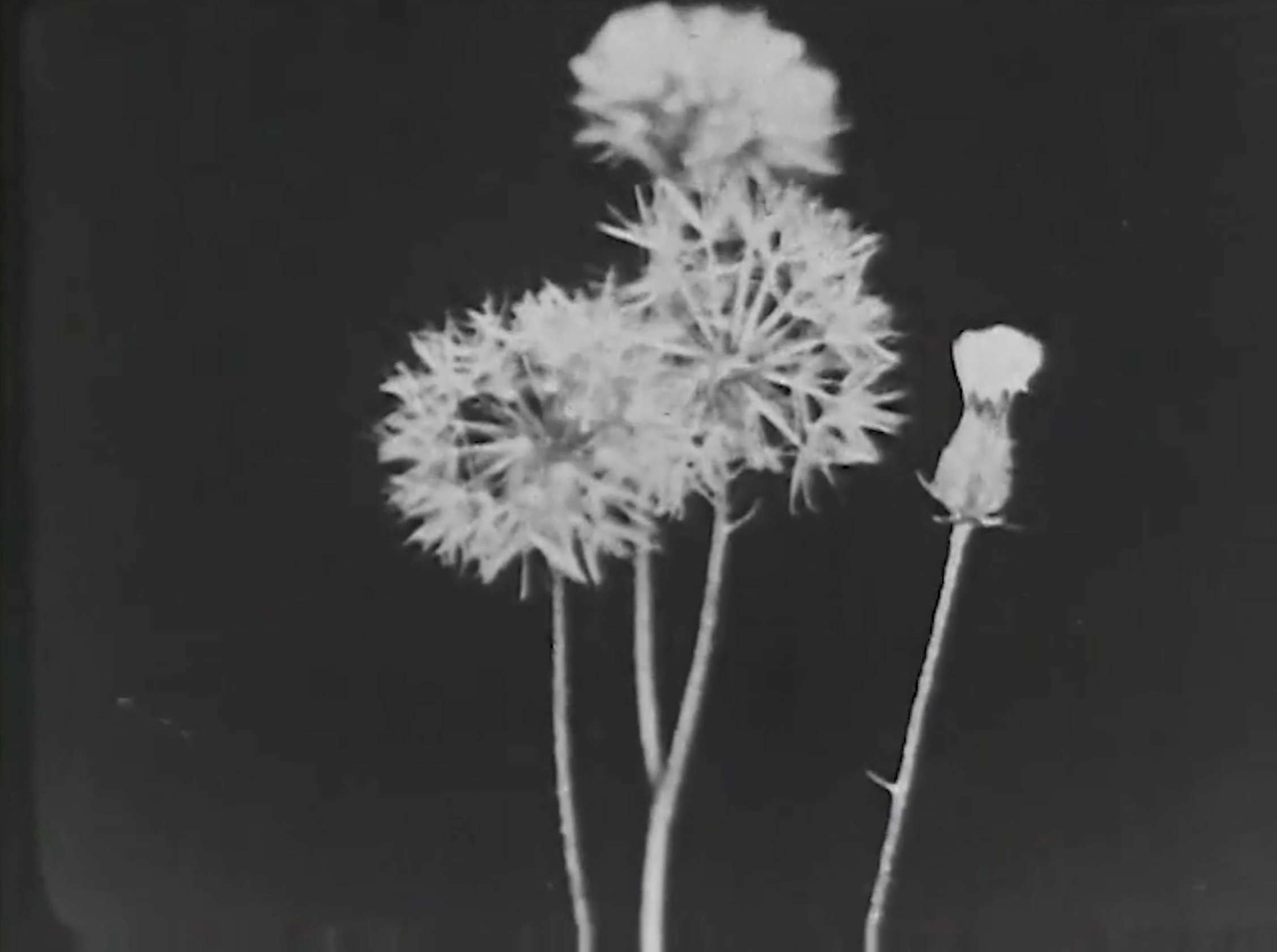
Welcome to issue #169 of TriQuarterly, and thank you to the many hands that helped nurture this collection into the vivacious garden of voices it has become. Collaborative work like this gives me hope, and I hope it inspires you too. Like a seed cloud carried in the wind and toward an unknown, distant place, projects like TriQuarterly remind me of one certainty — the seeds of our work will land, and they will grow.
It would be impossible to organize every poem, essay, story, and video in Issue 169 into one neat theme. There are, however, traces of connection. There’s a certain kind of connective tissue, like the mycelial network of a fungus, that comes with living through something larger than ourselves.
This issue, in some ways, revolves around memory and what we inherit, both claimed and unclaimed, such as in Margaret Redmond Whitehead’s essay “Door to the Clouds”, where a speaker pieces together her father’s slow disappearance from her family’s life with excerpts of poetry he left behind. Showcasing a larger, systemic form of inheritance, Esé Emmanuel’s video essay “problem space” showcases heaps of textiles, once discarded by the “Global North,” now in a market in Lagos, where the film’s subject participates in the “violent hyper-productive regime of global capital.”
When considering “inheritance” as what we, ourselves, give to the next generation, one of the most surprising throughlines in this issue is the sheer volume of stories that include children who either fail to meet, or willfully defy, their parents’ expectations–In Kara Crawford’s short story “Trimming” a girl is chastised by her mother for her incessant itching and obsession with other peoples’ teeth. Lindsay Hunter’s story “The Nudists” begins when a child’s parents are called into the principal’s office to discuss her worrisome behavior. In his poem “Dusk” Nick Lantz poignantly captures the thin barrier between childhood innocence and the one-way trip toward “the reservoir’s great ocean.” I can’t quite articulate why we have such a large cast of disobedient, audacious, and sometimes strange, young people–but I find myself rooting for them all (and by proxy, our future!).
This theme of inheritance and memory also feels tangled with ideas of time. In Joyce Dehli’s “Reprieve”, a different, but equally potent reclamation of memory and time transpires. The essay’s speaker expresses gratitude for a moment of exhale amid the looming reality of cancer. Of human mortality, the speaker writes, “A body carries its own death, a promise it will keep.”
The works featured in this issue remind me of how time is more mysterious, more noncompliant than the utilitarian ways in which we use it, which is to say time is mistaken as a constant in our lives. Rather, in the world of Issue 169, time is very much alive, and in that way, movable.
Thank you to TriQuarterly’s esteemed Genre Editors–Hannah Bonner, Starr Davis, Dan Fliegel, Jennifer Companik, Patrick Bernhard, Emily Mirengoff, and Laura Joyce-Hubbard–without whom it would’ve been impossible to curate such a striking collection of works. Thank you to advisors Colin Pope, Sarah Shulman, and Northwestern’s English Department for your continued support and generous guidance.
Thank you, lastly, to all our subscribers and readers out there in the world. Your support and passion helps me believe in our world, and the work we do, a little more.
With gratitude,
–Jess Masi, Managing Editor
MASTHEAD
Managing Editor: Jess Masi
Faculty Advisor: Sarah Shulman
Staff Advisor: Colin Pope
Film Editor: Hannah Bonner
Fiction Editors: Jennifer Companik, Emily Mirengoff, Patrick Bernhard, Laura Joyce-Hubbard
Nonfiction Editor: Starr Davis
Poetry Editor: Daniel Fliegel
Social Media Intern: Alyson Font
Readers: Nathalie Bonds, Erika Carey, Eleanor Colligan, Liz Howey, Nathaniel Forester, Jess Limardo, Claire Moacdieh, Sarbani Mukherjee, Amanda Norton, Paula Nwosu, Andrew Stojkovich, genea tafesse, Amanda Vitale, Jeremy Wilson, Eileen Zampa, Jodi Cressman, Amanda Dee, Kristi Ferguson, Susan Lerner, Jenna Mather, Andi Myles, Sarah Minor, Kathryn O'Day, Lauren Short, Yvonne W, Kelsey Werkheiser, D.S. Winters, Christine Barkley, William Ward Butler, Daylyn Carrigan, Abigail Chang, Cindy King, Jessica Manack, Amanda Maret Scharf, Tanya Young
Image from What the Present Does by Ashley Dailey
Shortstop
I was four foot, one
caterpillar. Black hair
all tussle & God-talk.
Slim prayers pop-flying
from this gone bad fruit
for mouth. I stayed low.
Played king to the crickets.
I was salt lick. Spoonfed.
Confessional
Wednesday might be my favorite day.
All the bakeries in Berkeley open and
with a little conviction you can persuade
the guard you belong on the manicured
lawn of the tennis club, and maybe even
join the ladies and their ten-brim visors
for a sandwich of jambon and Gruyère.
Dusk
All the neighborhood kids come home from the woods
with something missing: shoelaces, a finger, an eye, the words
for table or mother.
Counterintelligence
What proves what we don’t know we don’t know.
What bends back to examine its own bending-back-on.
SCENES FROM THE MAUSOLEUM
Dead men in the kitchen next to a charcuterie board.
Dead men in the den at the poker table.
Dead men bathing in my tub, lying in my bed.
Music plays. I am a bird outside a window
of the house of my body.
THIS STICK OF GRAPHITE IS NOT LIKE THE OTHERS
This stick of graphite is not like the others. You wouldn’t know it by writing.
Inside are ants, rushing up staircases, transporting eggs to safety.
MOON’S MORNING
Moon’s morning. Opening night.
Possum on porch, distressed and distressing.
And the just-enough use of force, like pressing
a dimple into a bottle cap.
A BIKE IS LIKE A THOUGHT BECAUSE
A bike is like a thought because
a smaller wheel drives a larger.
Put a bookmark right there, close book.
Or your finger, and close it partway.
AMENDMENT TO THE PLEDGE I SIGNED PROMISING TO NOT PROMOTE RADICAL THEORIES ABOUT THE OVERTHROW OF THE STATE WHILE TEACHING FOR THE STATE
Rabbit and the Years
In one hand, Rabbit carried a handful of water.
In two hands, Rabbit carried the handful of water.
INTO BEING
Here’s the only picture I have left: there is a telephone booth
in Otsuchi, white, four sides made of glass-panes.
DARK INK
See how pain comes like a developing image: slowly then all at once.
COUNTERPOINT
drowsy scansion
of the sycamore’s
crown, December’s
migrant penury
from People Who Look Like You
The problem of being with a white man belongs only to you, not to the white man with whom you share this problem.
A Hare’s Ear
A bone of cloud lain in the valley
of its begetting, a tumulus of souls,
laying the car on that and then under it, to emerge
to sun shining in a hare’s ear blowing dead
on the tar, and swaying the hips of the car